
Where you put the stairs is one of the biggest decisions in a loft conversion. It affects the loft layout, the first-floor layout, head height, fire safety, and how “natural” the new floor feels.
In West London, we work on a lot of Victorian and Edwardian terraces and semis in areas like Ealing, Acton, Chiswick, Hammersmith, Fulham, Richmond, Kew, Barnes and Twickenham. These homes often have similar challenges: tight landings, limited headroom, and a need to protect bedroom space on the first floor.
We are Loft Conversion West London. We have specialised exclusively in loft conversions for over 25 years, completing hundreds of projects across Ealing, Acton, Chiswick, Hammersmith, Fulham, Richmond, Kew, Brentford, Hanwell, Greenford, Northolt, Ruislip and Uxbridge. Every project has a dedicated project manager, we work on fixed pricing with no hidden fees, and our work is backed by a 5-year insurance-backed guarantee through HIG, with warranties up to 10 years.
In this guide, we will explain the best places to put loft conversion stairs in West London homes, the pros and cons of each option, and how to avoid the common layout mistakes.
The best option in most West London homes: above the existing stairs
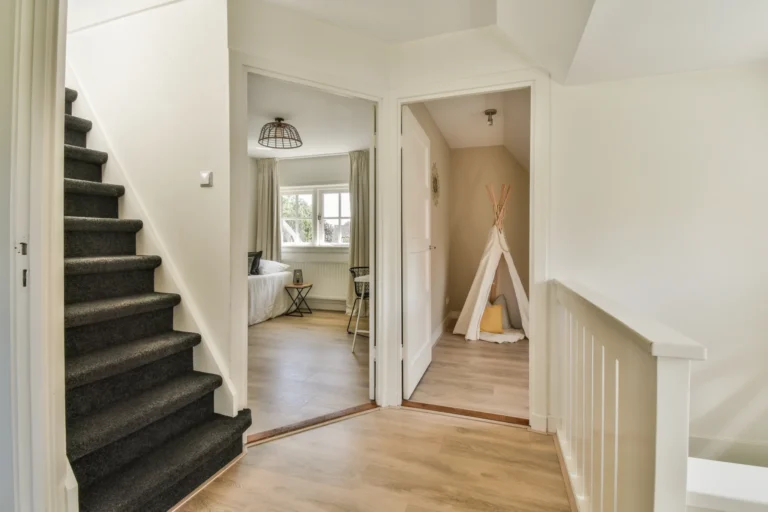
In many houses, the most sensible place for loft stairs is directly above the existing staircase.
This works well because:
• It uses space efficiently
• It keeps the layout logical and familiar
• It often helps with headroom, because the stairwell already creates a void
• It usually protects your first-floor bedrooms
In Victorian and Edwardian terraces around Acton, Ealing and Chiswick, this is often the cleanest solution.
What this layout usually looks like
Typically:
• The stairs continue up from the first-floor landing
• You arrive into a small loft landing
• The loft bedroom and en suite branch off from that landing
When designed properly, it feels like a proper new storey.
Option 2: taking space from the rear bedroom (when the landing is too tight)
Sometimes the existing stair position does not allow a comfortable stair to the loft. This can happen when:
• The landing is very small
• The roof shape creates headroom issues
• The stair needs a turn that will not fit
In those cases, a common alternative is to take a portion of the rear bedroom to create the stair.
Pros
• Can solve headroom and stair pitch problems
• Can create a better loft arrival point
Cons
• Reduces the size of a first-floor bedroom
• Can affect how the first floor feels overall
In West London family homes, we usually try to avoid sacrificing a bedroom unless it is the only sensible route.
Option 3: reworking the landing (small changes can unlock a better stair)
A lot of homeowners assume the landing is fixed. In reality, small layout changes can make a big difference.
Examples include:
• Moving a door position slightly
• Changing a door swing
• Using a pocket door in a tight spot
• Adjusting a cupboard
These tweaks can create enough space for a comfortable stair without taking a big chunk out of a bedroom.
Option 4: stairs into the loft from a different room (rare, but sometimes necessary)
In some houses, the only workable route is to place the stairs from a specific room, such as:
• A rear bedroom
• A study
• A box room
We treat this as a last resort because it can:
• Reduce privacy
• Make the loft feel less integrated
• Create awkward circulation
If you ever see a design where you have to walk through a bedroom to reach the loft, it needs careful thought.
What makes a stair location “good” (the decision criteria)
When we assess stair placement, we look at:
1) Headroom on the stair flight and at the top
Headroom issues can force compromises.
We always confirm head height early so you do not end up redesigning mid-project.
2) Impact on the first floor
A loft conversion should improve the house, not ruin the floor below.
We aim to:
• Keep bedrooms practical
• Avoid chopping rooms into awkward shapes
• Keep the landing usable
3) Fire safety and escape route
Loft conversions often require a protected escape route.
Stair placement affects:
• The route down to the final exit
• Whether doors need upgrading
• How the stair enclosure is formed
4) How furniture will get upstairs
It is not just people.
We consider:
• Bed and mattress access
• Bathroom fittings
• Wardrobes and storage
A stair that is technically compliant but impossible to move furniture up is not a good design.
5) Privacy and day-to-day flow
You want the loft to feel private.
A good stair location:
• Keeps the loft separate from bedrooms below
• Avoids walking through a room to access the loft
• Creates a sensible landing at the top
Best stair layout ideas for common West London property types
Victorian and Edwardian terraces
Most common best option:
• Stairs above the existing stairs
If the landing is tight:
• Quarter-turn stairs or a small landing rework can help
Semi-detached homes
Often you have slightly more flexibility.
Common solutions:
• Stairs above the existing stairs
• A wider stair if space allows
• Better landing options at the top
Homes in conservation areas
Stair placement is mostly internal, but conservation areas can influence:
• Roof shape choices
• Dormer size and position
That can affect head height and therefore stair design.
In places like Richmond, Kew and parts of Chiswick, we plan the whole design together so the stair works with the roof layout.
Common stair placement mistakes (and how to avoid them)
1) Putting stairs where they steal too much bedroom space
Better:
• Explore stairs above the existing stairwell first
2) Accepting a steep stair because it “fits”
A steep stair can make the loft feel like an afterthought.
Better:
• Rework the landing or adjust the loft layout to get a comfortable stair
3) Not planning the top landing properly
If the top landing is cramped, the loft feels awkward.
Better:
• Plan door swings and landing space early
4) Forgetting the stairwell lighting
A dark stairwell makes the loft feel separate.
Better:
• Consider a rooflight over the stairs
• Add good landing lighting
A practical checklist: choosing the best place for loft stairs
Copy and paste this:
• Start with stairs above the existing stairs
• Check headroom on the stair flight and at the top
• Confirm fire safety requirements and escape route
• Measure the impact on first-floor rooms
• Plan the top landing and door swings
• Consider furniture access
• Plan stairwell lighting early
• Only take space from a bedroom if there is no better option
How we approach stair placement on West London loft conversions
Because we specialise exclusively in loft conversions, we have seen what works and what causes problems later.
We design stair placement so that:
• The loft feels like a proper new floor
• The first floor still works for your family
• The stairs are safe, comfortable, and compliant
Every project has a dedicated project manager, we work on fixed pricing with no hidden fees, and our work is backed by a 5-year insurance-backed guarantee through HIG, with warranties up to 10 years.
FAQs: where to put loft conversion stairs in West London
Is it always best to put loft stairs above the existing stairs?
In many West London homes, yes. It is usually the most space-efficient and logical option. But some layouts need alternatives.
Will loft stairs reduce the size of our first-floor bedrooms?
Not always. If the stairs go above the existing stairwell, the impact is often minimal. If the landing is too tight, you may need to take space from a bedroom.
Can we put loft stairs in a bedroom?
Sometimes, but it is usually a last resort because it affects privacy and the usability of that room.
What is the biggest constraint when choosing stair location?
Headroom and fire safety are usually the biggest constraints. Both need to be planned early.
Can we change the first-floor landing to make stairs work?
Often yes. Small changes like door positions or using a pocket door can create enough space for a better stair.
How do we make sure the stairs are not too steep?
By designing the stair with a comfortable pitch and using the available space properly. If a stair feels too steep, it usually means the layout needs adjusting.
Will a rooflight over the stairs help?
Yes. It is one of the best ways to bring daylight into the stairwell and make the loft feel connected to the rest of the house.
Do stairs affect loft conversion building regulations?
Yes. Stairs are a major part of compliance, including headroom, guarding, and fire safety.
Next step: design the stairs and loft together
The best stair location is not something you decide in isolation. It needs to work with the loft layout, roof design, and building regulations.
If you are planning a loft conversion in West London, we will help you choose the best stair position so the loft feels natural, safe, and comfortable.
Every project has a dedicated project manager, we work on fixed pricing with no hidden fees, and our work is backed by a 5-year insurance-backed guarantee through HIG, with warranties up to 10 years.