
If you’re a West London homeowner looking to add space without the hassle and expense of moving, a loft conversion might be exactly what you need. Loft conversions transform unused attic space into functional living areas—bedrooms, home offices, bathrooms, or entertainment rooms—adding both space and value to your property. This comprehensive guide explains what loft conversions are, how they work, and why they’re such a popular choice for homeowners across Hammersmith, Ealing, Hounslow, and throughout West London.
What Exactly is a Loft Conversion?
A loft conversion is the process of transforming your existing loft or attic space into a habitable room or rooms. Rather than leaving your loft as wasted storage space filled with old boxes and Christmas decorations, a conversion creates proper living areas with adequate headroom, natural light, insulation, and all the features you’d expect from any other room in your home.
The beauty of loft conversions is they work within your property’s existing footprint. You’re not building outwards into your garden or upwards beyond your roofline (in most cases)—you’re simply making better use of space that’s already there but currently underutilized. For West London homeowners where property prices are high and moving costs are substantial, loft conversions offer a cost-effective way to gain the extra space your family needs.
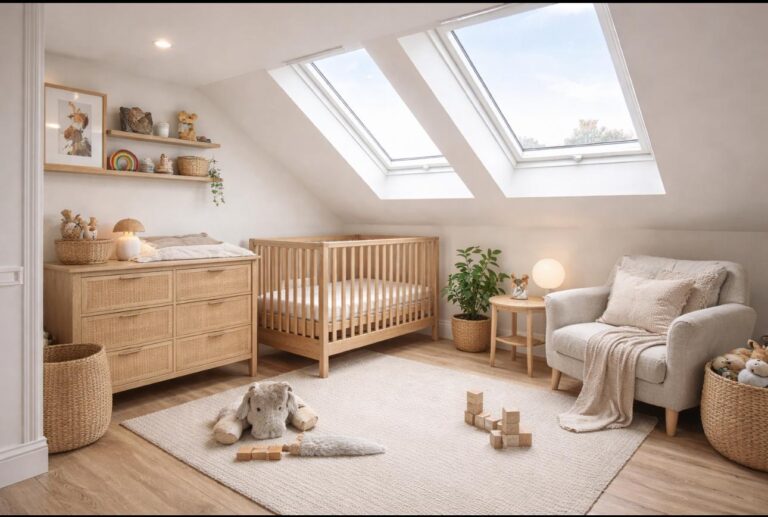
Loft conversions can create virtually any type of room. Master bedroom suites with en-suite bathrooms are incredibly popular throughout Ealing and Hammersmith, giving parents private retreats away from children’s bedrooms. Home offices have become essential for many West London professionals working remotely, and loft conversions provide quiet, separate workspaces. Guest bedrooms, playrooms, hobby rooms, and even additional bathrooms—all these are possible through loft conversions.
What makes a loft suitable for conversion?
Not every loft is immediately suitable for conversion, but most West London properties can be converted with the right approach. The key factors are headroom, floor space, and roof structure. Ideally, you want at least 2.2-2.4 metres of headroom at the highest point, though this can be worked around with different conversion types. Your loft needs sufficient floor area to create usable rooms—generally at least 20-30 square metres. The roof structure matters too, with traditional cut timber roofs being easier to convert than modern truss roofs, though both can be converted with proper structural work.
Victorian and Edwardian terraced houses throughout West London typically have excellent loft spaces for conversion. These properties were built with generous roof heights and traditional timber roof structures that lend themselves beautifully to conversion. 1930s semi-detached properties across Ealing and Hounslow also convert well, with good headroom and floor space. Even more modern properties can be converted, though they may require additional structural work.
How Does a Loft Conversion Actually Work?
Understanding the loft conversion process helps you know what to expect and plan effectively. Whilst every project is unique, most loft conversions follow a similar sequence of steps from initial assessment through to completion.
Step 1: Initial Assessment and Design
The process starts with a thorough assessment of your existing loft space. A specialist loft conversion company visits your West London property to measure your loft, assess the roof structure, check headroom and floor space, and discuss what you want to achieve. They’ll identify any structural challenges and recommend the most suitable conversion type for your property.
Based on this assessment, detailed designs are created showing exactly how your loft will be transformed. These designs include floor plans, elevations showing the external appearance, and specifications for all structural work, insulation, electrics, and plumbing. For West London properties in conservation areas or those requiring planning permission, these designs form part of your planning application.
Step 2: Planning Permission and Building Regulations
Many loft conversions in West London fall under permitted development rights, meaning you don’t need planning permission. However, larger conversions, properties in conservation areas, or conversions that significantly alter your roof’s appearance typically require planning approval. Your loft conversion specialist handles all planning applications, liaising with your local council to secure necessary approvals.
All loft conversions require building regulations approval, regardless of whether planning permission is needed. Building regulations ensure your conversion meets safety standards for structural integrity, fire safety, insulation, ventilation, and staircase design. Your specialist submits building regulations applications and coordinates inspections throughout the project.
Step 3: Structural Work and Preparation
Once approvals are in place, the physical work begins. Scaffolding is erected around your property to provide safe access for construction work. Inside your home, protection is installed to contain dust and debris, minimizing disruption to your daily life.
The first major task is structural reinforcement. Floor joists are typically strengthened or replaced to meet building regulations for habitable rooms—your existing loft floor was only designed to support storage weight, not people living in the space. Steel beams are often installed to support new structures and redistribute loads. If you have a truss roof, some trusses may be removed and replaced with traditional timber framing, a process requiring careful structural engineering.
Step 4: Creating the Conversion Structure
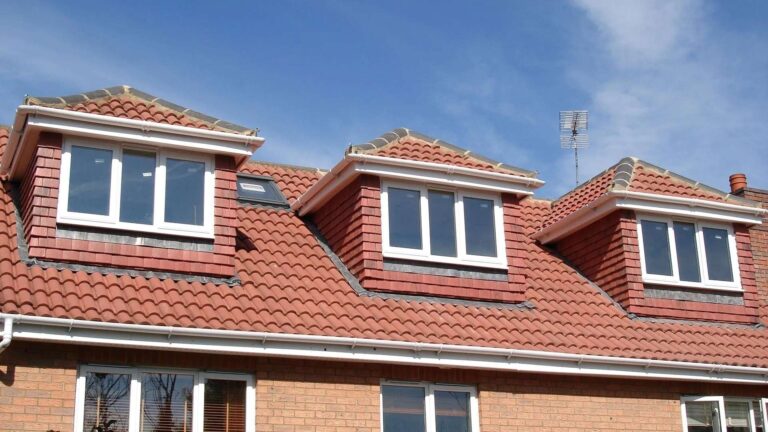
The type of conversion you’re having determines what happens next. For dormer conversions (the most common type in West London), sections of your roof are removed and dormer structures are built extending from the existing roof slope. These dormers create additional headroom and floor space. For Velux conversions, roof windows are installed in your existing roof slope without altering the roofline. Mansard conversions involve replacing one or both roof slopes with near-vertical walls, creating maximum space.
Throughout this phase, weatherproofing is critical. Your property must remain watertight even whilst roof sections are open. Experienced contractors work efficiently and use temporary coverings to protect your home from the elements.
Step 5: Windows, Insulation, and First Fix
Once the basic structure is complete, windows are installed—either dormer windows, Velux roof windows, or a combination depending on your conversion type. These windows flood your new loft space with natural light, transforming what was a dark attic into a bright, welcoming room.
High-performance insulation is fitted throughout your loft conversion. Modern building regulations require excellent thermal performance, so substantial insulation is installed in the roof, walls, and floor. This insulation keeps your loft conversion comfortable year-round whilst reducing energy bills.
First fix work follows, with electricians and plumbers installing all the hidden infrastructure. Electrical cables are run for lighting, sockets, and heating. If you’re including a bathroom, plumbing pipes are installed for water supply and drainage. Heating is extended to your loft, typically with radiators or underfloor heating.
Step 6: Stairs and Access
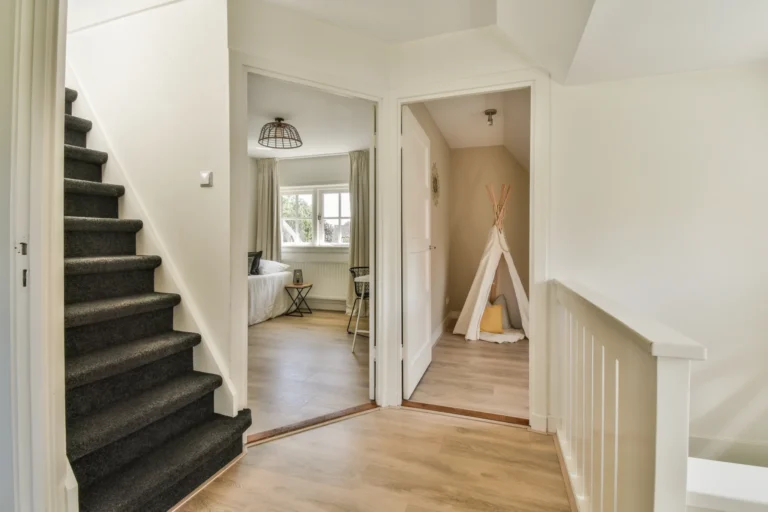
Your new loft conversion needs proper access, which means installing a staircase from the floor below. Building regulations specify exact requirements for staircase dimensions, headroom, and handrails to ensure safety. The staircase location is carefully planned to minimize impact on existing rooms whilst providing convenient access to your loft.
Most West London loft conversions use space-saving staircases that fit within tight footprints. These might be straight flights, L-shaped configurations, or space-saving designs that maximize efficiency. The staircase opening is created by removing sections of the existing ceiling and floor, with structural work ensuring everything remains safe and sound.
Step 7: Plastering and Second Fix
With all the structural and first fix work complete, plasterboard is fitted throughout your loft conversion, creating smooth walls and ceilings. Plastering follows, with skilled plasterers creating perfect finishes ready for decoration.
Second fix work completes all the visible elements. Light fittings, sockets, switches, and radiators are installed and connected. If you’re including a bathroom, all sanitaryware—toilets, sinks, showers, baths—is fitted and plumbed in. Doors are hung, skirting boards and architraves are fitted, and all the finishing touches that make your loft feel like a proper room are completed.
Step 8: Decoration and Final Finishing
The final phase transforms your loft conversion from a building site into a beautiful living space. Decoration is completed to your chosen specifications—walls are painted, flooring is laid (carpet, laminate, or engineered wood are popular choices), and any built-in storage or furniture is installed.
Final building regulations inspection confirms everything meets required standards. Any minor snagging items are addressed, and your loft conversion is complete and ready to use. Most West London loft conversions take 6-8 weeks from start to finish, though larger or more complex projects may take 10-12 weeks.
Different Types of Loft Conversions
Understanding the different types of loft conversions helps you choose the right approach for your West London property. Each type has distinct characteristics, benefits, and suitability for different properties and situations.
Dormer Loft Conversions
Dormer conversions are the most common type in West London. A dormer is a box-like structure that extends from your existing roof slope, creating additional headroom and floor space. Most dormers extend from the rear roof slope, maintaining your property’s street appearance whilst maximizing usable space at the back.
Dormer conversions suit virtually all property types throughout West London—Victorian terraces, Edwardian houses, 1930s semis, and modern properties. They create substantial additional space at reasonable cost, typically ranging from £35,000-£50,000. Many rear dormer conversions fall under permitted development, avoiding the need for planning permission.
Velux or Rooflight Conversions
Velux conversions (also called rooflight conversions) are the simplest and most cost-effective type. Rather than altering your roofline, Velux conversions install roof windows in your existing roof slope, flooding your loft with natural light whilst maintaining your property’s external appearance.
These conversions work brilliantly when you already have good headroom and floor space in your loft. They’re popular throughout West London for creating home offices, studies, or guest bedrooms where you don’t need maximum space. Velux conversions typically cost £25,000-£35,000 and almost always fall under permitted development.
Mansard Loft Conversions
Mansard conversions create maximum space by replacing one or both roof slopes with near-vertical walls and a flat roof. This approach dramatically increases headroom and floor space, often creating enough room for multiple bedrooms or luxurious master suites.
Mansard conversions are popular on Victorian and Edwardian terraced properties throughout Hammersmith, Fulham, and other West London areas. They require planning permission and represent a more substantial investment (£45,000-£65,000+), but the space gains and property value increases justify the cost for many homeowners.
Hip-to-Gable Conversions
Hip-to-gable conversions suit properties with hipped roofs (where the roof slopes on all four sides). The conversion replaces the sloping hip with a vertical gable wall, creating additional floor space and headroom. Hip-to-gable conversions are often combined with rear dormers for maximum space.
These conversions are popular on semi-detached and detached properties throughout Ealing, Hounslow, and across West London. They typically cost £40,000-£55,000 and create substantial additional space, particularly when combined with dormer extensions.
L-Shaped Loft Conversions
L-shaped conversions combine dormers on two adjacent roof slopes—typically the rear and one side—creating maximum usable space. These conversions suit semi-detached and detached properties where you can extend on both rear and side elevations.
L-shaped conversions create 30-40% more space than standard rear dormers, making them ideal for master suites with en-suites and dressing areas, or for creating two separate bedrooms. They typically cost £55,000-£70,000 and require planning permission, but deliver exceptional results for homeowners needing maximum space.
Why Loft Conversions Are So Popular in West London
Loft conversions have become increasingly popular throughout West London, and it’s easy to understand why. The combination of high property prices, substantial moving costs, and the desire for more space makes loft conversions an obvious solution for many homeowners.
Property values in West London make moving expensive. A typical three-bedroom house in Ealing, Hammersmith, or Hounslow costs £600,000-£800,000+. Moving to a larger four-bedroom property means spending significantly more, plus stamp duty (£20,000+ on a £600,000 property), estate agent fees (£12,000-£15,000), removal costs, and all the hassle and stress of moving. A loft conversion at £40,000-£50,000 delivers the extra space you need at a fraction of the cost.
Loft conversions add substantial value. Most quality loft conversions add 15-20% to property values in West London. A £45,000 investment in a loft conversion for a £600,000 property could increase its value by £90,000-£120,000, delivering excellent return on investment whilst creating space your family enjoys immediately.
West London properties have excellent loft potential. The Victorian, Edwardian, and 1930s properties that dominate much of West London were built with generous loft spaces perfect for conversion. These properties have good headroom, substantial floor areas, and traditional roof structures that convert beautifully into additional living space.
Families need more space. Whether it’s children growing up and needing their own rooms, parents wanting home offices for remote working, or simply the desire for more comfortable living spaces, West London families consistently need more room. Loft conversions deliver that space without the upheaval of moving.
Is a Loft Conversion Right for Your West London Property?
Most West London properties can be converted, but understanding whether a loft conversion suits your specific situation helps you make informed decisions. Several factors determine whether a loft conversion is the right choice for you.
Your property type matters. Victorian and Edwardian terraced houses throughout West London are ideal for loft conversions, with excellent loft spaces and traditional roof structures. 1930s semi-detached properties across Ealing and Hounslow convert brilliantly. Modern properties can be converted but may require more structural work. Flats and maisonettes have restrictions, though top-floor flats can sometimes be converted with freeholder permission.
Your space needs should justify the investment. Loft conversions make sense when you need an additional bedroom, home office, or living space and want to avoid moving. If you’re planning to stay in your property for at least 3-5 years, a loft conversion delivers excellent value. If you’re planning to move soon anyway, the disruption and investment may not be worthwhile.
Your budget needs to be realistic. Quality loft conversions in West London cost £25,000-£70,000 depending on the type and specifications. You need sufficient budget not just for the conversion itself but also for contingencies (typically 10-15% extra). If your budget is very tight, a loft conversion may stretch your finances uncomfortably.
Your property’s condition matters. Loft conversions work best on properties in good structural condition. If your property needs substantial repairs—roof replacement, structural issues, damp problems—these should be addressed first. However, minor issues can often be resolved as part of the conversion project.
Getting Started with Your West London Loft Conversion
If you’re convinced a loft conversion is right for your West London property, the first step is getting a professional assessment. Specialist loft conversion companies offer free, no-obligation assessments where they visit your property, measure your loft, discuss your requirements, and provide expert advice on the best approach for your situation.
During this assessment, ask plenty of questions. How long will the project take? What type of conversion do they recommend? Will you need planning permission? What’s included in their quote? Do they handle all aspects of the project including design, planning, building regulations, and construction? What guarantees do they offer?
Look for specialists who focus exclusively on loft conversions rather than general builders. Loft conversion specialists understand the unique challenges and requirements of these projects. They should offer fixed-price packages covering all work, provide dedicated project managers, have comprehensive insurance, and offer insurance-backed guarantees for peace of mind.
Check their experience with properties like yours in your specific area of West London. A company with dozens of completed conversions in Ealing, Hammersmith, or Hounslow understands local planning requirements, building regulations, and the specific characteristics of West London properties.
Conclusion
Loft conversions transform unused attic space into beautiful, functional living areas that add both space and value to West London properties. The process involves careful planning, structural work, and skilled construction, but the results deliver exceptional value—extra space your family needs without the expense and hassle of moving.
Whether you need an additional bedroom, a home office for remote working, or a luxurious master suite, a loft conversion can make it happen. With West London property prices making moving increasingly expensive, loft conversions offer a smart, cost-effective solution that enhances your home and your quality of life.
Understanding what loft conversions are and how they work is the first step towards creating the extra space your West London property needs. With the right specialist guiding you through the process, your loft conversion journey can be smooth, stress-free, and deliver results that transform how you live in your home.