
Stairs are one of the most regulated parts of a loft conversion. They are also one of the areas where a design can look fine on paper, but fail building control if key details are missed.
In West London, we see the same issues come up again and again, especially in Victorian and Edwardian terraces where space is tight and headroom can be limited.
Getting the stairs right is not just about comfort. It is about safety, compliance, and making sure your loft conversion can be signed off properly.
We are Loft Conversion West London. We have specialised exclusively in loft conversions for over 25 years, completing hundreds of projects across Ealing, Acton, Chiswick, Hammersmith, Fulham, Richmond, Kew, Brentford, Hanwell, Greenford, Northolt, Ruislip and Uxbridge. Every project has a dedicated project manager, we work on fixed pricing with no hidden fees, and our work is backed by a 5-year insurance-backed guarantee through HIG, with warranties up to 10 years.
In this guide, we will explain the key building regulations that apply to loft conversion stairs, what building control typically looks for, and how to avoid the common compliance problems.
Important note
Building regulations are detailed, and requirements can vary depending on your property type, layout, and whether your loft conversion creates a third storey.
This guide is practical and homeowner-friendly, but building control has the final say.
The big picture: what building regulations are trying to achieve
Loft conversion stair regulations are designed to make sure:
• You can safely go up and down the stairs every day
• You can escape safely in an emergency
• The stair opening and structure are properly supported
• The stairs are protected with suitable guarding and handrails
Most stair problems happen when the loft layout is designed first and the stairs are squeezed in afterwards.
1) Headroom requirements (the most common constraint)
Headroom is one of the first things we check.
In simple terms, you need enough clear height above the stairs so people can use them safely.
Why headroom is tricky in West London homes
In many terraces around Acton, Ealing, Chiswick and Hammersmith:
• Roof pitches can be shallow
• The stair position is fixed by the existing layout
• The best stair location is often above the existing stairs, but the roof shape can limit head height
This is why the stair position and the roof design must be planned together.
Practical tip
If headroom is tight, solutions can include:
• Adjusting where the stairs start or turn
• Slightly changing the loft landing position
• Designing the dormer and roof layout to support head height where it matters
2) Stair pitch and comfort (not just what fits)
Stair pitch is about how steep the stairs are.
Homeowners sometimes see designs where the stairs are steeper than expected, especially when space is tight.
Building regulations aim to keep stairs usable and safe.
What causes steep stairs in loft conversions?
Usually:
• Not enough length available for the stair run
• Trying to avoid taking space from a bedroom
• Leaving stair design too late
A stair that is technically possible but uncomfortable is not a good outcome.
3) Rise and going (step height and depth)
Rise and going relate to:
• Rise: the height of each step
• Going: the depth of each step
These must be designed so the stairs feel consistent and safe.
Poorly designed stairs can feel awkward and increase the risk of trips.
4) Width and access (everyday practicality)
Stair width affects:
• Day-to-day comfort
• Moving furniture up to the loft
• How the loft feels as a proper new floor
In many West London homes, you are working within the existing stairwell width, so the goal is to design the loft stairs so they feel consistent with the house.
5) Landings and door clearances
Landings are often overlooked.
Building control will look at:
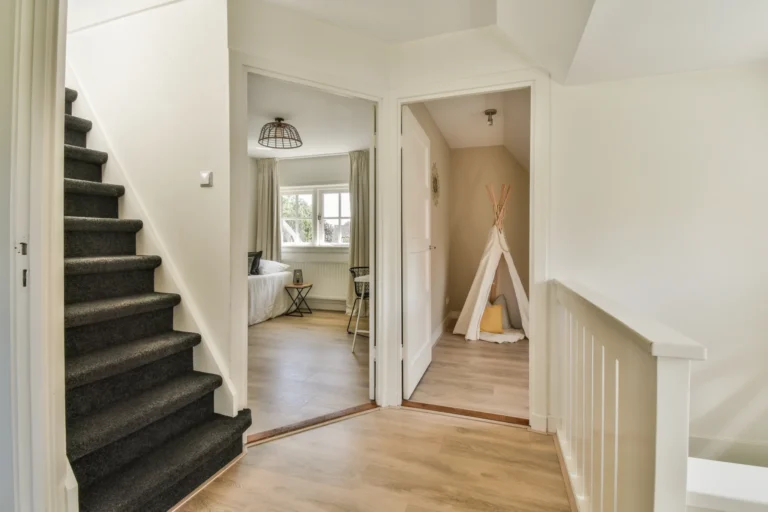
• Safe access at the top and bottom of the stairs
• Door swings and clearances
• Whether the loft landing is usable, not cramped
A loft conversion should not feel like you are stepping off the stairs into a door.
6) Handrails and guarding (safety on open edges)
Where there is a drop, you need guarding.
This includes:
• Balustrades along the stair flight
• Guarding around the stairwell opening on the loft floor
• Handrails at the correct height
In family homes, especially with children, this is a big day-to-day safety issue.
7) Fire safety and the protected escape route
Loft conversions often require a protected escape route.
Stairs are central to this because they form the route from the loft down to the final exit.
Depending on your layout, building control may require:
• Fire doors to rooms opening onto the stair enclosure
• Interlinked smoke alarms on each floor
• Specific fire protection details around the stairwell
This is why stair design and fire safety cannot be treated separately.
8) Structural support around the stair opening
Creating a stair opening involves structural work.
Building control will want to see that:
• The opening is properly trimmed and supported
• Loads are transferred correctly
• The floor structure is safe and compliant
This is not an area to cut corners.
Common loft stair compliance problems we see in West London
1) Not enough headroom at the top of the stairs
This can lead to redesign late in the project.
2) A stair that is too steep
Often caused by trying to fit the stairs into a space that is too tight.
3) Awkward top landing
If the landing is too small, the loft feels compromised.
4) Fire safety not planned early
This can lead to unexpected requirements like door upgrades.
5) Poor guarding or handrail design
This can delay sign-off.
A practical checklist: loft stair building regulations
Copy and paste this:
• Confirm stair position early (ideally above existing stairs)
• Check headroom on the flight and at the top
• Confirm stair pitch is comfortable and compliant
• Confirm rise and going are consistent
• Plan the loft landing space and door swings
• Confirm handrails and guarding details
• Confirm fire safety strategy and protected escape route
• Confirm structural trimming around the stair opening
How we make sure loft stairs pass building control in West London
Because we specialise exclusively in loft conversions, we know where projects typically run into issues.
Our approach is:
• Measure and confirm headroom early
• Design stairs and loft layout together
• Keep the first floor practical and the loft arrival point comfortable
• Plan fire safety and escape route from the start
• Build with proper structural support and safe guarding
Every project has a dedicated project manager, we work on fixed pricing with no hidden fees, and our work is backed by a 5-year insurance-backed guarantee through HIG, with warranties up to 10 years.
FAQs: loft conversion stair building regulations in West London
Do loft conversion stairs have to go above the existing stairs?
Not always, but it is often the best and most space-efficient option. If it does not work due to headroom or layout, alternatives can be designed.
What is the most common stair issue in loft conversions?
Headroom. It is usually the first constraint that affects stair position and loft layout.
Can we use a steep staircase if space is tight?
Building regulations are designed to keep stairs safe and usable. If a stair is too steep, the design usually needs adjusting.
Do we need a landing at the top of the loft stairs?
Yes, you need safe access at the top, and the landing must work with door clearances and day-to-day use.
Do loft stairs affect fire door requirements?
Yes. Stairs form the escape route, so stair layout affects whether the stairwell needs to be protected and whether doors need upgrading.
Will building control check the stair opening structure?
Yes. The opening must be properly supported and trimmed. This is a key part of compliance.
Can we add a rooflight over the stairs?
Often yes, and it can make the stairwell feel brighter and more connected. It needs to be designed properly alongside the roof layout.
Who signs off loft conversion stairs?
Building control signs off the stairs as part of the overall loft conversion compliance. A specialist loft conversion company should guide you through the design and build so it passes smoothly.
Next step: get the stairs designed early
If you want a loft conversion that feels like a proper new floor, the stairs need to be designed properly from the start.
If you are planning a loft conversion in West London, we will advise on the best stair position, design a compliant staircase, and manage the project through to sign-off.
Every project has a dedicated project manager, we work on fixed pricing with no hidden fees, and our work is backed by a 5-year insurance-backed guarantee through HIG, with warranties up to 10 years.