
One of the first questions we get from homeowners in West London is simple.
Can we stay living at home during the loft conversion?
In most cases, yes. Many families stay in the property throughout. But it helps to understand what it is really like, when the disruption peaks, and what you can do to make it easier.
We are Loft Conversion West London. We have specialised exclusively in loft conversions for over 25 years, completing hundreds of projects across Ealing, Acton, Chiswick, Hammersmith, Fulham, Richmond, Kew, Brentford, Hanwell, Greenford, Northolt, Ruislip and Uxbridge. Every project has a dedicated project manager, we work on fixed pricing with no hidden fees, and our work is backed by a 5-year insurance-backed guarantee through HIG, with warranties up to 10 years.
This guide is a straight, practical explanation of what living at home during a loft conversion is like in real West London houses, and how to keep day-to-day life running.
The honest answer: it is manageable, but it is not quiet
A loft conversion is a building site above your ceiling.
You can usually continue living in the home, but you should expect:
• Noise at certain stages
• Dust, even with good protection
• People coming and going
• Temporary changes to how you use stairs and landings
• Occasional days where you will want to be out of the house
The good news is that most disruption is predictable.
What makes loft conversions easier to live through
Loft conversions are often more liveable than extensions because much of the work happens above you.
They tend to be easier when:
• Access is mainly via scaffolding
• The team keeps the site tidy and protected
• You have a clear programme and regular updates
• You make decisions early so the job does not drag on
In West London, the biggest extra factor is logistics. Parking, skips, and deliveries can add stress if not planned.
The stages that affect your daily life most
Every project is different, but most loft conversions follow a similar pattern.
Stage 1: scaffolding and initial set-up
This is usually the first visible change.
What it feels like:
• Scaffolding going up
• Materials arriving
• More activity outside the house
How to make it easier:
• Speak to neighbours early
• Confirm skip placement and permits
• Clear access routes inside the house
In streets around Chiswick, Hammersmith, Fulham, and Acton, this stage can feel busy because the streets are tight and parking is controlled.
Stage 2: structural works and roof opening
This is when the build becomes noisy.
What it feels like:
• Hammering, cutting, and drilling
• Occasional vibration
• Short periods where you may prefer to be out
How to make it easier:
• Plan work calls and quiet time around the noisiest days
• If you have young children, plan daytime routines accordingly
• Keep pets away from work areas
A specialist team will use temporary protection and keep the home secure, but you should still expect disruption.
Stage 3: first fix (electrics, plumbing, insulation)
This stage is often less dramatic, but it can affect decision-making.
What it feels like:
• Trades moving through the house
• Questions about sockets, lights, and layouts
How to make it easier:
• Decide lighting and socket positions early
• Keep a simple written list of decisions
• Confirm changes in writing to avoid confusion
Stage 4: staircase opening (the biggest internal disruption)
If there is one stage that changes the feel of the house, it is the staircase.
What it feels like:
• Dust when the opening is formed
• Temporary changes to how you use the landing
• Increased foot traffic through the house
How to make it easier:
• Protect stairs and landings properly
• Remove pictures and fragile items from stair walls
• Create a safe zone room away from the stairs
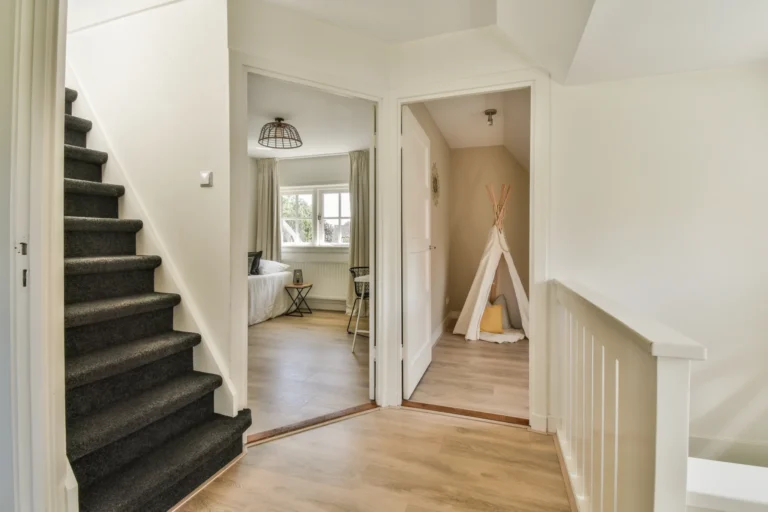
In Victorian and Edwardian terraces in Ealing, Acton, Chiswick and Hammersmith, staircases are often narrow. Good protection and planning makes a big difference.
Stage 5: plastering and finishing
This is when the project starts to feel real, but it can still be messy.
What it feels like:
• Dust from sanding
• More internal movement
How to make it easier:
• Keep doors closed where possible
• Cover items you care about
• Expect a final deep clean at the end
Dust: realistic expectations (and what actually helps)
Even with good site protection, dust is part of building work.
What helps most:
• Floor protection on stairs and landings
• Dust sheets on furniture near access routes
• Keeping doors closed
• Draft excluders on key rooms
• Regular tidy-ups, not just a clean at the end
The goal is controlled dust, not zero dust.
Noise: when it is worst
Noise tends to peak during:
• Structural work
• Roof opening stages
• Cutting steels and timbers
• Staircase opening
If you work from home in Richmond, Kew, Barnes, or Ealing, it is worth planning a few days to work elsewhere during the loudest stages.
Safety: children, pets, and day-to-day routines
A professional team will keep the site safe, but living in the home means you need clear routines.
Practical steps:
• Keep children away from work areas
• Keep pets in a separate room during deliveries and noisy work
• Agree where tools and materials will be stored
• Make sure you know which areas are off-limits
Neighbours: how to keep things calm in West London
Neighbour relationships matter more in West London because houses are close and streets are busy.
A simple approach works best:
• Give neighbours a polite heads-up before work starts
• Share working hours
• Keep the site tidy
• Be proactive if scaffolding affects access or light
In terraced streets near Turnham Green, Ravenscourt Park, Shepherds Bush, and Fulham Broadway, this can prevent complaints and keep the build smoother.
Parking, skips, and deliveries: the West London reality
This is a practical pain point.
If you are in a controlled parking zone, you may need:
• Skip permits
• Parking arrangements for the team
• Planned delivery slots
A well-run project will plan logistics early so the build does not lose days to access issues.
Should you move out?
Sometimes moving out makes sense.
You might consider it if:
• You have a newborn or very young children
• You have a very small home with no quiet space
• You work from home full-time and cannot relocate
• You are very sensitive to dust or noise
• The build includes major work to the floor below
But for many West London families, staying is realistic with the right preparation.
A practical living at home checklist (copy and paste)
Use this before your loft conversion starts:
• Set up a safe zone room away from the stairs
• Clear and protect stairs, landings, and hallways
• Remove pictures and fragile items from stair walls
• Decide key finishes early (lights, sockets, bathroom items)
• Plan childcare and pet routines for noisy days
• Speak to neighbours and share working hours
• Confirm skip and scaffolding logistics and permits
• Agree how often you will get updates from your project manager
• Plan a few days out of the house during the loudest stages
How we make living at home easier during a loft conversion
We focus on structure and communication.
• Dedicated project manager for every loft conversion
• Clear programme and regular updates
• Proper protection and tidy working practices
• Planned logistics for tight West London streets
• Fixed pricing with no hidden fees
• Work backed by a 5-year insurance-backed guarantee through HIG, with warranties up to 10 years
That is how we help families across Ealing, Acton, Chiswick, Hammersmith, Fulham and Richmond get through the build with less stress.
You can learn more about our approach on our homepage:
https://loftconversionwestlondon.com/
Explore our loft conversion services here:
https://loftconversionwestlondon.com/what-is-a-loft-conversion-and-how-does-it-work/
Related posts in this category:
FAQs: living at home during a loft conversion in West London
Can we stay in the house during a loft conversion?
In most cases, yes. Many homeowners stay living at home, but you should expect noise and dust at certain stages.
What is the most disruptive stage if we stay at home?
Usually the staircase opening stage, because it affects the floor below and increases internal movement through the house.
How do we reduce dust while living at home?
Good protection, keeping doors closed, and covering valuables helps. Controlled dust is the realistic goal.
Will we lose access to rooms?
Usually you can still use most of the home, but there may be short periods where access is restricted around the staircase and landing.
Is it safe for children and pets?
It can be, with clear boundaries and good site management. Keep children and pets away from work areas and plan routines around deliveries.
How noisy is it day to day?
Some days are relatively calm, but structural stages can be loud. It is worth planning a few days out during the noisiest work.
Do West London logistics make it harder to live at home?
They can. Parking restrictions, skips, and deliveries need planning. A specialist team will manage this early.
When should we consider moving out?
If you have no quiet space, a newborn, or you cannot work around noise, moving out for part of the build can reduce stress.
Next step: plan for the disruption, then keep it simple
Living at home during a loft conversion in West London is usually doable.
The secret is not pretending it will be quiet. It is planning for the noisy and dusty stages, protecting the key areas, and keeping communication clear.
If you want a structured, well-managed loft conversion with a dedicated project manager, fixed pricing, and an insurance-backed guarantee, we can guide you through the process from start to finish.