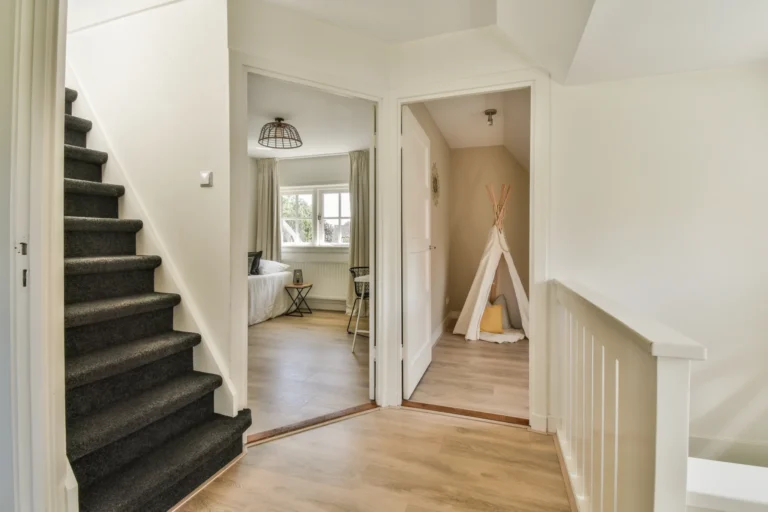

Loft conversion stairs are one of the most important parts of the whole project. They affect safety, building regulations compliance, how the new space feels, and how much usable room you actually get upstairs.
In West London homes, especially Victorian and Edwardian terraces in places like Ealing, Acton, Chiswick, Hammersmith and Fulham, the stair design is often the difference between a loft that feels like a proper new floor and one that feels awkward.
We are Loft Conversion West London. We have specialised exclusively in loft conversions for over 25 years, completing hundreds of projects across Ealing, Acton, Chiswick, Hammersmith, Fulham, Richmond, Kew, Brentford, Hanwell, Greenford, Northolt, Ruislip and Uxbridge. Every project has a dedicated project manager, we work on fixed pricing with no hidden fees, and our work is backed by a 5-year insurance-backed guarantee through HIG, with warranties up to 10 years.
In this guide, we will explain loft conversion stair regulations in plain English, plus the design ideas that work best for West London properties.
Why loft stairs matter more than people expect
Homeowners often focus on the new bedroom and bathroom. But the stairs:
• Decide where the loft starts and ends
• Affect head height and layout upstairs
• Change how the first floor landing works
• Must meet strict building regulations
A well-designed staircase makes the loft feel like it belongs.
Building regulations for loft conversion stairs (the essentials)
Building regulations cover several key areas. The exact details can vary depending on your property and design, but these are the main principles we work to.
1) Safe pitch and comfortable use
Stairs need to be safe and comfortable to use daily.
In practical terms:
• The pitch cannot be too steep
• Treads and risers must be consistent
• The stair should feel stable and easy to walk
If stairs are too steep, they can feel like a ladder. That is not acceptable for a proper loft conversion.
2) Headroom
Headroom is one of the biggest constraints in loft conversions.
You need enough head height on the stair flight and at the landing so people can move safely.
In many West London terraces, we design the stair position carefully to avoid headroom issues under the roof slope.
3) Fire safety and protected escape route
Fire safety is a major part of loft conversion compliance.
Common requirements can include:
• A protected escape route from the loft to the final exit
• Fire doors to rooms opening onto the stair enclosure (often required when converting to a third storey)
• Smoke alarms on each floor, interlinked
The exact approach depends on your house layout and the type of conversion.
4) Balustrades and guarding
Any stair and landing needs proper guarding so nobody can fall.
This includes:
• Balustrades at the side of the stairs
• Guarding around the stair opening at loft level
This is especially important for family homes.
5) Stair width and access
Stairs need to be practical.
While not every home can have a wide staircase, the design must allow safe access. We also consider how furniture will get up to the loft.
6) Minimum landing space and door swings
At the top of the stairs, you need a safe landing area.
We plan:
• Where doors open
• How you move from the stairs into the loft room
• Whether a door should open into the room rather than onto the landing
Small changes here can make the loft feel far more comfortable.
Where do loft stairs usually go in West London homes?
In most West London properties, the best place for loft stairs is above the existing staircase.
This is popular because:
• It uses space efficiently
• It keeps the layout logical
• It often helps with headroom
• It avoids taking a big chunk out of a bedroom
In Victorian and Edwardian terraces around Acton, Ealing and Chiswick, this is usually the cleanest solution.
When stairs cannot go above the existing stairs
Sometimes the roof shape or layout makes this difficult.
Alternative options can include:
• Taking space from a rear bedroom
• Reworking the landing
• Adjusting the loft layout to suit the stair arrival
We always aim to keep the first floor practical. A loft conversion should not ruin the floor below.
Stair design ideas that work well in loft conversions
1) Straight flight stairs (simple and efficient)
A straight flight is often the most space-efficient and easiest to comply with.
It can work well when:
• The stair can run above the existing stairs
• You have enough length for a comfortable pitch
2) Quarter-turn stairs (common in tighter layouts)
Quarter-turn stairs can help when you need to change direction to fit the stair into the available space.
This is common in West London terraces where the landing is compact.
3) Half-turn stairs (when you need to save length)
A half-turn can reduce the length required, but it needs careful design to keep it comfortable.
4) Space-saver stairs (only in specific situations)
Space-saver stairs are steeper and have alternating treads.
They are not suitable for most loft conversions intended as a main bedroom. They may be acceptable in limited situations, but they are not the standard approach for a proper loft conversion.
If a homeowner asks about them, we usually explore better layout solutions first.
How to make loft stairs feel like part of the house
Keep the stair arrival bright
A dark stairwell makes the loft feel separate.
Good ideas include:
• A rooflight above the stairwell
• Well-placed downlights on the landing
• Wall lights for softer light
Match the style of the existing staircase
In period homes in places like Richmond, Kew and Barnes, the staircase is part of the character.
We often recommend:
• Matching handrails and spindles where possible
• Keeping finishes consistent
• Avoiding overly modern details that clash
Use the space under the stairs
Depending on layout, you may be able to add:
• A cupboard
• Shelving
• A small storage nook
Common loft stair mistakes (and how to avoid them)
- Putting stairs where they steal a bedroom
If stairs take too much space from a first-floor bedroom, the whole house can feel compromised.
Better:
• Explore stairs above the existing stairwell first
- Not planning headroom early
Headroom issues can force expensive redesigns.
Better:
• Confirm head height on drawings early
- Treating fire safety as an afterthought
Fire safety changes the design.
Better:
• Plan the protected route, doors, and alarms from the start
- Awkward door positions at the top landing
This can make the loft feel cramped.
Better:
• Plan door swings and landing space carefully
A practical loft stairs checklist (copy and paste)
Use this checklist when planning loft conversion stairs:
• Aim to place stairs above the existing staircase if possible
• Confirm headroom on the stair flight and at the landing
• Choose a stair type that feels comfortable, not steep
• Plan guarding and balustrades for safety
• Confirm fire safety requirements early (doors, alarms, escape route)
• Plan lighting for the stairwell and landing
• Check door swings and landing space at the top
• Consider how furniture will be moved into the loft
How we handle loft stairs on West London projects
Because we specialise exclusively in loft conversions, we know the common stair challenges in West London housing stock.
We plan stairs so that:
• They comply with building regulations
• They feel natural and safe
• The first floor layout still works
• The loft feels like a real new level
Every project has a dedicated project manager, we work on fixed pricing with no hidden fees, and our work is backed by a 5-year insurance-backed guarantee through HIG, with warranties up to 10 years.
FAQs: loft conversion stairs in West London
Do loft conversion stairs have to go above the existing stairs?
Not always, but it is often the best option in West London homes. It uses space efficiently and keeps the layout logical.
What is the biggest issue with loft conversion stairs?
Headroom and fire safety are usually the two biggest factors. Both need to be designed in early.
Can we use space-saver stairs for a loft conversion?
Usually not for a proper loft conversion used as a main bedroom. Space-saver stairs may be acceptable only in limited situations, but we normally explore better layout options first.
Do we need fire doors for a loft conversion?
Often yes, especially when the loft creates a third storey. The exact requirements depend on your layout and building control guidance.
How do we make loft stairs feel less steep?
By designing a comfortable pitch, keeping treads and risers consistent, and using the available space properly. A straight or well-designed turning stair usually feels best.
Can we put a bathroom at the top of the stairs?
Yes, but you need a safe landing area and sensible door positions so the top of the stairs does not feel cramped.
Will loft stairs reduce the size of our first-floor rooms?
They can if designed poorly. The goal is to place stairs above the existing stairwell where possible to minimise impact.
Can we add a rooflight over the stairwell?
Often yes, and it is one of the best ways to make the loft feel brighter and more connected to the rest of the house.
Next step: get the stairs right early
Loft conversion stairs are not something to decide at the end. They shape the whole project.
If you are planning a loft conversion in West London, we will help you design stairs that comply with building regulations, feel safe and comfortable, and make the loft feel like a natural extension of your home.
Every project has a dedicated project manager, we work on fixed pricing with no hidden fees, and our work is backed by a 5-year insurance-backed guarantee through HIG, with warranties up to 10 years.