
Fire safety is one of the most important parts of any loft conversion. It is also one of the areas that causes the most confusion for homeowners.
A lot of people assume fire doors are only needed in big houses, or that they are optional if you are careful. In reality, building regulations are very clear that a loft conversion must have a safe escape route and the right fire protection measures.
We are Loft Conversion West London. We have specialised exclusively in loft conversions for over 25 years, completing hundreds of projects across Ealing, Acton, Chiswick, Hammersmith, Fulham, Richmond, Kew, Brentford, Hanwell, Greenford, Northolt, Ruislip and Uxbridge. Every project has a dedicated project manager, we work on fixed pricing with no hidden fees, and our work is backed by a 5-year insurance-backed guarantee through HIG, with warranties up to 10 years.
In this guide, we will explain when fire doors are typically required for a loft conversion in West London, why they matter, and what practical options you have.
The simple answer
In many loft conversions, yes, fire doors are required.
This is especially common when:
• The loft conversion creates a third storey
• Bedrooms open onto the stair enclosure
• Building control requires the stairwell to be a protected escape route
The exact requirements depend on your house layout and the design. Building control has the final say.
Why fire doors matter in a loft conversion
A loft conversion changes the escape route.
If there is a fire on a lower floor, you need time to get out safely from the loft. Fire doors help by:
• Slowing the spread of smoke and flames
• Protecting the stairwell as an escape route
• Giving you extra time to leave the house
Fire doors are not about making your home feel like a commercial building. They are about safety.
What is a protected escape route?
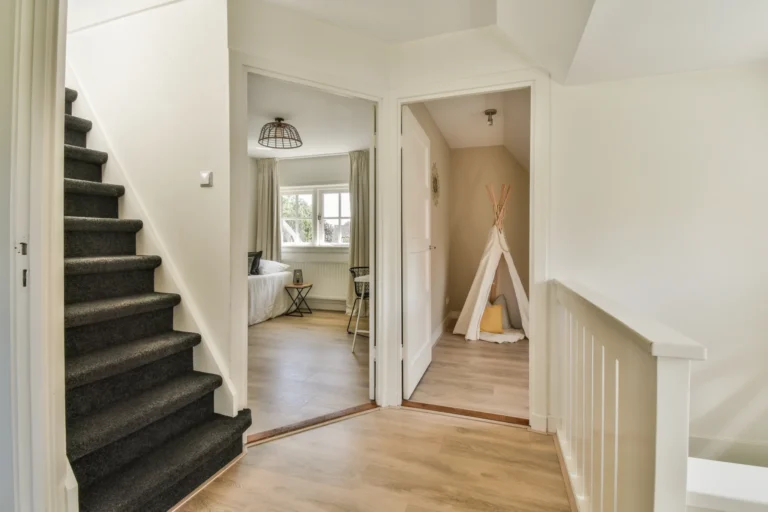
A protected escape route is usually the stairway from the loft down to the final exit, enclosed and protected so it stays usable during a fire.
In many West London homes, this means:
• The loft stairs connect to the existing stairs
• The stairwell becomes the main escape route
• Doors opening onto that stairwell may need to be fire-rated
This is one reason why stair design and fire safety must be planned together.
When are fire doors typically required?
While every project is assessed individually, fire doors are commonly required in these situations.
1) Loft conversion creates a third storey
If your house becomes three storeys after the loft conversion, building regulations often require:
• Fire doors to rooms opening onto the stair enclosure (commonly on the first floor and sometimes ground floor)
• Interlinked smoke alarms
• A protected stair route
Many Victorian and Edwardian terraces in Acton, Ealing, Chiswick, Hammersmith and Fulham fall into this category once the loft is converted.
2) Bedrooms open onto the stairs
If bedrooms open directly onto the stairwell, fire doors are often part of the protection strategy.
3) The loft room is a bedroom
If the loft is used as a bedroom, fire safety requirements are usually stricter than if it is a storage room.
4) Open-plan ground floors
Some homes have open-plan layouts downstairs.
Open-plan can affect fire safety design because it changes how smoke could spread and how the escape route is protected.
In these cases, building control may require additional measures.
What counts as a fire door?
A fire door is a door that is designed and installed to resist fire for a set period.
Key points:
• It must be properly fitted
• It usually needs the correct frame and seals
• It must close properly
A fire-rated door that is poorly installed is not doing its job.
Do we have to replace every door in the house?
Not always.
This is where homeowners get worried. The goal is not to replace doors for the sake of it. The goal is to protect the escape route.
In many loft conversions, the focus is on:
• Doors on the first floor that open onto the stairwell
• Sometimes doors on the ground floor, depending on layout
Building control will confirm what is needed.
Practical options to keep fire doors looking good
Fire doors do not have to look ugly.
Options include:
• Fire-rated doors that match your existing style
• Upgrading door linings and adding seals discreetly
• Choosing finishes that suit period homes
In premium areas like Richmond, Kew and Barnes, homeowners often want fire safety upgrades that look consistent with the character of the property.
Other fire safety measures that usually come with a loft conversion
Fire doors are only one part of the picture.
Common measures include:
• Interlinked smoke alarms on each floor
• Heat alarm in the kitchen
• Fire-resistant plasterboard and detailing
• Protected stair enclosure
The exact package depends on your home and design.
Common mistakes homeowners make with loft fire safety
1) Assuming fire doors are optional
They are often required, and ignoring them can delay sign-off.
2) Leaving fire safety decisions too late
Fire safety affects design.
Better:
• Plan it early with your loft layout and stair design
3) Buying the wrong doors
Not all doors marketed as fire doors are suitable for every situation.
Better:
• Follow building control guidance and use proper fire-rated products
4) Poor installation
Fire doors must be fitted correctly.
Better:
• Use experienced installers and ensure everything closes properly
A practical checklist: fire doors for loft conversions
Copy and paste this:
• Confirm whether the loft conversion creates a third storey
• Identify which rooms open onto the stair enclosure
• Ask how the protected escape route will be formed
• Confirm which doors need upgrading
• Plan interlinked smoke alarms on each floor
• Make sure fire doors are properly fitted with the right seals
• Choose a style that matches your home
• Do not leave fire safety until the end
How we handle fire safety on West London loft conversions
Because we specialise exclusively in loft conversions, we know what building control will look for and how to design the project so it passes smoothly.
We focus on:
• A clear protected escape route
• Fire doors where required
• Proper alarms and fire protection measures
• A finish that still looks right for your home
Every project has a dedicated project manager, we work on fixed pricing with no hidden fees, and our work is backed by a 5-year insurance-backed guarantee through HIG, with warranties up to 10 years.
FAQs: fire doors for loft conversions in West London
Do we always need fire doors for a loft conversion?
Not always, but in many cases, yes, especially when the loft conversion creates a third storey. Building control will confirm the exact requirements.
Which doors usually need to be fire-rated?
Often the doors on the first floor that open onto the stairwell, and sometimes ground floor doors depending on the layout.
Can we keep our existing doors?
Sometimes, but it depends on whether they can meet the required fire rating and whether the escape route needs upgrading.
Do fire doors have to be self-closing?
This depends on the specific requirements for your property and the guidance from building control.
Will fire doors ruin the look of our home?
No. There are fire-rated doors available in styles that suit period homes and modern finishes. The key is choosing the right look and fitting them properly.
What other fire safety upgrades come with a loft conversion?
Usually interlinked smoke alarms on each floor, and sometimes additional measures depending on layout.
Can open-plan layouts affect fire door requirements?
Yes. Open-plan ground floors can change how the escape route is protected, which can lead to additional requirements.
Who decides if we need fire doors?
Building control has the final say. A good loft conversion company will design the project to meet the regulations and guide you through what is required.
Next step: plan fire safety early
Fire safety is not a box-ticking exercise. It is part of designing a loft conversion that is safe and compliant.
If you are planning a loft conversion in West London, we will explain exactly what is required for your layout, design the escape route properly, and make sure the project is signed off smoothly.
Every project has a dedicated project manager, we work on fixed pricing with no hidden fees, and our work is backed by a 5-year insurance-backed guarantee through HIG, with warranties up to 10 years.