
The staircase is one of the most critical and often most challenging elements of any loft conversion. It’s not just about getting upstairs it’s about doing so safely comfortably and in compliance with strict building regulations whilst minimizing the impact on your existing first floor space. After 25 years of designing and building loft conversions across West London we can tell you that staircase design requires careful planning precise execution and thorough knowledge of building regulations.
A poorly designed staircase makes your loft conversion awkward to use eats up valuable space on your first floor and can fail building regulations. A well designed staircase integrates seamlessly with your home provides safe and comfortable access and adds value to your property.
Working across Ealing Hammersmith Richmond Fulham and the surrounding areas we’ve designed hundreds of staircases for every type of property Victorian terraces with tight spaces Edwardian semis with generous landings and everything in between. Let us walk you through everything you need to know about loft conversion staircases building regulations requirements design options space considerations and how to create a staircase that works perfectly for your home.
Why Staircase Design Matters
Your loft conversion staircase must meet demanding building regulations for safety. These regulations cover everything from pitch steepness headroom width handrails and fire safety. They’re not optional building control will inspect your staircase during construction and won’t issue your completion certificate unless it fully complies.
Beyond regulations staircase design affects how usable your loft conversion is. A comfortable staircase that’s easy to climb makes the loft a proper part of your home that you use daily. An uncomfortable steep staircase makes the loft feel like an afterthought that you avoid using.
Staircase design also impacts your first floor space. The staircase takes up significant room typically 23 square metres on your first floor landing. Poor positioning can block doorways reduce landing space or make existing rooms awkward to access.
Finally the staircase affects the character of your home. A well designed staircase that matches your existing stairs looks like it’s always been there. A poorly designed staircase looks like an addition and can detract from your property’s appeal.
Building Regulations Requirements
Building regulations Part K Protection from Falling Collision and Impact and Part B Fire Safety set specific requirements for loft conversion staircases.
Pitch Steepness
The pitch is the angle of the staircase. Building regulations limit the maximum pitch to 42 degrees for main staircases serving a loft conversion.
For context a typical staircase in a house has a pitch of 3840 degrees. A 42 degree staircase is noticeably steeper still comfortable to use but approaching the limit of what’s acceptable.
Steeper staircases over 42 degrees are only permitted for loft conversions serving a single room used solely by one household member essentially a private study or hobby room. These are rare because most loft conversions create bedrooms or multi use spaces.
Rise and Going
The rise is the vertical height of each step. The going is the horizontal depth of each step the part you stand on.
Building regulations require
- Minimum going 220mm
- Maximum rise 220mm
The relationship between rise and going must satisfy the formula
2 × rise + going = between 550mm and 700mm
This formula ensures steps are comfortable and safe. If the rise is too high or the going too shallow steps become uncomfortable and dangerous.
For example
- Rise 200mm going 250mm 2 × 200 + 250 = 650mm ✓ acceptable
- Rise 220mm going 220mm 2 × 220 + 220 = 660mm ✓ acceptable
- Rise 230mm going 200mm 2 × 230 + 200 = 660mm ✓ acceptable but steep
Headroom
Minimum headroom the vertical clearance above the staircase must be at least 2 metres measured vertically from the pitch line the imaginary line connecting the nosings of all steps.
This ensures you can use the staircase without hitting your head. Inadequate headroom is uncomfortable and dangerous.
Headroom must be maintained along the entire length of the staircase and for at least 2 metres beyond the top and bottom of the stairs.
Width
Minimum staircase width is 800mm measured between handrails or between wall and handrail if one side is against a wall.
This ensures adequate space to carry items up and down and allows two people to pass if needed.
Handrails
Handrails are required on at least one side of the staircase. If the staircase is wider than 1 metre handrails are required on both sides.
Handrails must be 9001000mm above the pitch line of the stairs and continue for the full length of the staircase.
Handrails must be graspable you can wrap your hand around them and securely fixed to support the weight of someone falling.
Landings
A landing is required at the top and bottom of the staircase. Landings must be at least as wide and as long as the staircase width minimum 800mm.
If the staircase has more than 16 risers steps an intermediate landing is required to break up the flight.
Doors opening onto landings must not reduce the effective landing width below 800mm when open.
Winders
Winders are tapered steps used to change direction for example in a corner. They’re common in loft conversion staircases where space is tight.
Building regulations allow winders but set specific requirements
- The going depth of winders must be at least 50mm at the narrow end
- The going must be at least 220mm measured 270mm from the inner handrail
- Winders must form part of a continuous series you can’t have a single winder between straight steps
Winders are more difficult to use than straight steps particularly when carrying items or for elderly people. We minimize winders where possible but use them when space constraints require it.
Guarding Balustrades
Guarding balustrades or banisters is required on open sides of staircases and landings to prevent falls.
Guarding must be at least 900mm high measured vertically from the pitch line.
Gaps in guarding between balusters must be small enough that a 100mm sphere cannot pass through. This prevents children getting stuck or falling through.
Fire Safety
Part B Fire Safety requires that loft conversions have adequate means of escape in case of fire.
For loft conversions creating habitable rooms the staircase must provide a protected escape route. This typically requires a fire door at the bottom of the loft staircase 30 minute fire rated door with self closer and smoke alarms on each floor.
If the loft conversion creates more than one habitable room or if the floor area exceeds certain limits additional fire safety measures might be required such as a protected stairwell or alternative means of escape.
We’ll cover fire safety in detail in a separate article but it’s important to understand that staircase design is closely linked to fire safety requirements.
Staircase Design Options
Several staircase designs are commonly used for loft conversions each with advantages and considerations.
Straight Flight Staircase
A straight flight staircase runs in a single straight line from bottom to top with no turns or landings except at top and bottom.
Advantages
- Simplest and most comfortable to use
- Easiest to carry items up and down
- Most cost effective to build
- Takes up least space in the loft itself
Considerations
- Requires significant straight line space on your first floor typically 34 metres
- Not always possible in properties with limited landing space
Straight flight staircases are our preferred option where space permits because they’re comfortable safe and cost effective.
L Shaped Staircase with Quarter Landing
An L shaped staircase turns 90 degrees typically using a quarter landing a square landing at the turn or winders tapered steps.
Advantages
- Fits into corner spaces efficiently
- Reduces the straight line space required
- Can work around existing doorways or features
Considerations
- Slightly less comfortable than straight flight because of the turn
- More expensive to build than straight flight
- Requires careful design to meet headroom requirements at the turn
L shaped staircases are common in loft conversions where landing space is limited.
U Shaped Staircase with Half Landing
A U shaped staircase turns 180 degrees typically using a half landing a rectangular landing at the turn.
Advantages
- Very space efficient the staircase doubles back on itself
- Works well where landing space is limited but ceiling height is adequate
- Creates a compact footprint
Considerations
- Requires adequate ceiling height for the landing and the flight above it
- More expensive to build than straight or L shaped staircases
- Can feel more enclosed than other designs
U shaped staircases are less common but useful in specific situations where space is very tight.
Spiral or Space Saver Staircases
Spiral staircases or space saver staircases alternating tread staircases are sometimes suggested for loft conversions because they take up minimal space.
Important Building regulations do NOT accept spiral or space saver staircases as the main access to habitable rooms in loft conversions. They’re only acceptable for access to single rooms used by one person such as a private study.
For loft conversions creating bedrooms or multi use spaces you must have a proper staircase meeting all building regulations requirements.
We don’t recommend spiral or space saver staircases because they’re uncomfortable difficult to use especially when carrying items and severely limit the usability of your loft conversion.
Staircase Positioning
Where you position the staircase on your first floor is critical for both functionality and compliance.
Common Positions
Above Existing Stairs
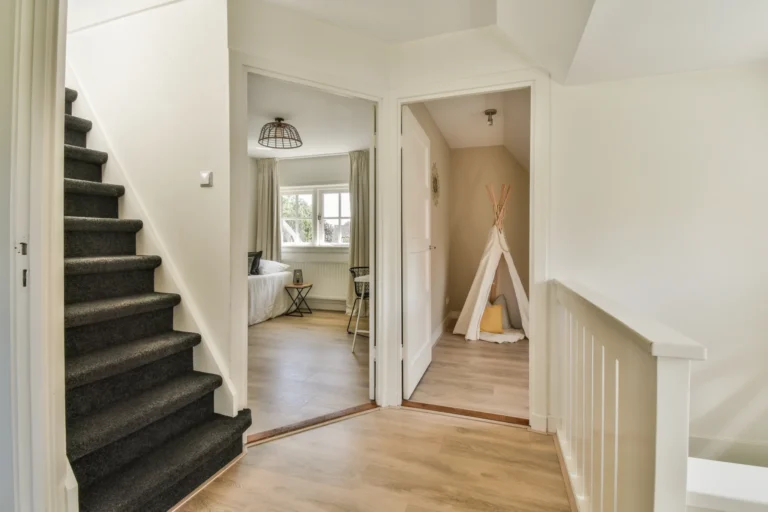
Positioning the loft staircase directly above your existing ground to first floor stairs is often ideal. This creates a logical flow through the house minimizes impact on first floor rooms and often provides the best headroom.
However it’s not always possible it depends on the layout of your first floor and the position of your existing stairs.
From Landing
Starting the staircase from your first floor landing is common. This preserves bedroom space and creates a dedicated circulation area.
The challenge is ensuring adequate landing space remains after the staircase is installed. Building regulations require minimum landing widths and you must be able to access all first floor rooms comfortably.
From Bedroom
Sometimes the staircase must start from within a first floor bedroom. This is less ideal because it reduces the bedroom size and creates traffic through the bedroom but it’s sometimes necessary where landing space is inadequate.
If the staircase starts from a bedroom that bedroom effectively becomes a circulation space which can affect how you use it.
Factors Affecting Position
Several factors determine the best staircase position
- Available space on first floor landing or bedroom
- Headroom you need 2 metres clearance above the stairs
- Position of existing doorways the staircase can’t block access to rooms
- Structural considerations where floor joists and beams are positioned
- Impact on existing rooms minimizing loss of usable space
We assess all these factors during our initial survey and design the staircase position that works best for your specific property.
Headroom Challenges
Headroom is often the most challenging aspect of staircase design particularly in Victorian and Edwardian properties where ceiling heights can be limited.
Why Headroom Is Challenging
You need 2 metres vertical clearance above the entire staircase. This means the ceiling above the stairs typically your loft floor must be high enough to provide this clearance.
In many properties the loft floor isn’t high enough particularly at the bottom of the staircase where it starts from the first floor.
Solutions for Inadequate Headroom
Dormer Over Staircase
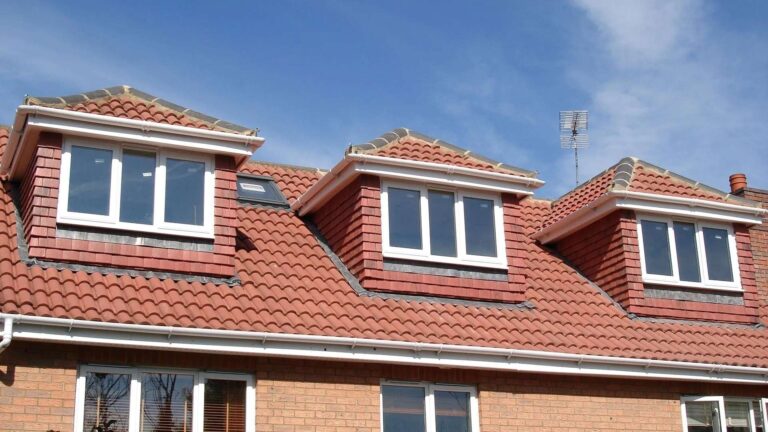
Building a dormer over the staircase opening raises the ceiling and provides adequate headroom. This is the most common solution and works well.
The dormer doesn’t need to be large just enough to cover the staircase opening and provide the required 2 metres clearance.
Lowering First Floor Ceiling
Lowering the ceiling on your first floor landing in the area where the staircase starts creates additional headroom. This involves dropping the ceiling by 100200mm which is usually acceptable on landings but not in bedrooms.
Adjusting Staircase Position
Sometimes moving the staircase position by even 500mm can make the difference between adequate and inadequate headroom. We explore all positioning options to find the solution that works.
Steeper Pitch
Using a steeper pitch closer to the 42 degree maximum reduces the horizontal space the staircase occupies and can help with headroom though it makes the stairs less comfortable.
Combination Approaches
Often a combination of solutions is needed a small dormer slight adjustment to position and optimized pitch.
Staircase Materials and Finishes
Staircases can be built from various materials and finished to match your home’s character.
Timber Staircases
Timber is the most common material for loft conversion staircases. It’s versatile relatively cost effective and can be finished in many ways.
Softwood typically pine is most common and can be painted stained or carpeted.
Hardwood oak ash or similar is more expensive but provides a premium finish and can be left natural or oiled.
Steel Staircases
Steel staircases have a modern industrial appearance. They’re strong durable and can be very space efficient.
They’re more expensive than timber and suit contemporary properties better than traditional homes.
Glass Balustrades
Glass balustrades instead of traditional wooden balusters create a modern open feel and allow light to pass through.
They’re more expensive than timber balustrades but popular in contemporary conversions.
Matching Existing Stairs
For traditional properties matching the new loft staircase to your existing stairs creates visual continuity. This might involve matching the baluster design handrail profile newel post style and finish paint stain or carpet.
We can replicate traditional staircase details to ensure your new loft staircase looks like it’s always been part of your home.
Building Control Inspection
Building control inspects staircases during construction to ensure they meet all requirements.
What Building Control Checks
- Pitch must be 42 degrees or less
- Rise and going of steps must meet formula requirements
- Headroom minimum 2 metres throughout
- Width minimum 800mm
- Handrails correct height securely fixed graspable
- Guarding correct height gaps no more than 100mm
- Landings adequate size at top and bottom
- Fire door at bottom if required
When Inspection Happens
The staircase is inspected after installation but before final finishes. Building control checks the structure and dimensions.
If the staircase doesn’t meet requirements building control will require it to be corrected which can be expensive and disruptive if the staircase is already built.
This is why proper design upfront is essential. We ensure staircases are designed to meet all requirements before construction begins.
Common Staircase Mistakes
Understanding common mistakes helps you avoid problems
Inadequate Headroom
Failing to provide 2 metres headroom throughout causes building regulations failure.
Solution Design the staircase with headroom in mind from the start. Use dormers or other solutions if needed.
Incorrect Rise Going Relationship
Steps that don’t meet the rise going formula are uncomfortable and fail building regulations.
Solution Calculate rise and going carefully to meet the formula. Don’t guess or use existing stairs as a template loft staircases often have different dimensions.
Poor Positioning
Positioning the staircase where it blocks doorways reduces landing space excessively or creates awkward circulation fails building regulations or makes the house difficult to use.
Solution Consider the impact on your first floor carefully. We assess all positioning options to find the best solution.
Missing or Incorrect Handrails
Handrails at the wrong height not graspable or not securely fixed fail building regulations and are dangerous.
Solution Install handrails exactly as required 9001000mm high graspable profile securely fixed.
Inadequate Guarding
Gaps in balustrades larger than 100mm allow children to get stuck or fall through and fail building regulations.
Solution Ensure baluster spacing is no more than 100mm. We check this carefully during installation.
Staircase Costs
Staircase costs vary depending on design complexity and materials
- Straight flight timber staircase £2,500£4,000
- L shaped timber staircase £3,500£5,000
- U shaped timber staircase £4,500£6,500
- Hardwood or premium finishes Add £1,000£2,000
- Glass balustrades Add £1,500£3,000
- Fire door at bottom £400£800
These costs are included in our fixed price quotes at Loft Conversion West London.
The staircase typically represents 58% of total loft conversion costs. Whilst it’s tempting to economize here the staircase is critical for safety compliance and usability it’s not the place to cut corners.
Impact on First Floor Space
The staircase takes up significant space on your first floor typically 23 square metres. Understanding and minimizing this impact is important.
Typical Space Requirements
A straight flight staircase requires approximately 34 metres of straight line space and 800mm width roughly 2.53 square metres total.
An L shaped staircase requires approximately 22.5 metres in each direction roughly 22.5 square metres total.
A U shaped staircase requires approximately 2 metres width and 34 metres length roughly 2.53 square metres total.
Minimizing Impact
We minimize impact by positioning the staircase to use existing circulation space landings rather than bedrooms where possible designing efficient layouts L shaped or U shaped where appropriate and ensuring remaining landing space is adequate for comfortable circulation.
Sometimes losing some first floor space is unavoidable but we always aim to minimize the impact whilst meeting building regulations.
Adding Value
Whilst the staircase takes up space on your first floor remember that it provides access to a new room on your second floor. The value added by the loft conversion far exceeds the small loss of first floor space.
Design Process
Our staircase design process ensures compliance and optimal results
Initial Survey
We measure your first floor carefully noting ceiling heights existing doorways room layouts and available space for the staircase.
Design Options
We prepare design options showing different staircase positions and configurations. We discuss the advantages and considerations of each option with you.
Detailed Design
Once you’ve chosen an option we prepare detailed drawings showing exact dimensions rise and going calculations headroom measurements and all building regulations compliance details.
These drawings form part of your building regulations application.
Building Regulations Approval
Building control reviews the staircase design as part of your building regulations application. They confirm that the design meets all requirements before construction begins.
Construction
During construction we build the staircase exactly as designed and approved. Building control inspects the completed staircase to confirm compliance.
This process ensures your staircase meets all requirements and works perfectly for your home.
Frequently Asked Questions
What are the building regulations requirements for loft conversion staircases?
Building regulations require maximum pitch of 42 degrees minimum going step depth of 220mm maximum rise step height of 220mm minimum headroom of 2 metres throughout minimum width of 800mm handrails on at least one side 9001000mm high guarding with gaps no more than 100mm and landings at top and bottom. The rise and going must also satisfy the formula 2 × rise + going = 550700mm. These are legal requirements that building control will check non compliant staircases will fail building regulations.
How much space does a loft conversion staircase take up?
A typical loft conversion staircase takes up 23 square metres on your first floor. A straight flight requires approximately 34 metres of straight line space plus 800mm width. An L shaped staircase requires approximately 22.5 metres in each direction. The exact space depends on your ceiling height which determines the number of steps needed and the staircase design. We design staircases to minimize impact on your first floor whilst meeting all building regulations requirements.
Can we use a spiral staircase for our loft conversion?
No not for habitable rooms. Building regulations do not accept spiral staircases or space saver staircases as the main access to bedrooms or multi use spaces in loft conversions. They’re only acceptable for access to single rooms used solely by one household member such as a private study. For loft conversions creating bedrooms you must have a proper staircase meeting all building regulations requirements. Spiral staircases are also uncomfortable and difficult to use particularly when carrying items.
Where should the loft staircase be positioned?
The best position depends on your specific property layout. Common options include directly above your existing stairs creates logical flow often provides best headroom from your first floor landing preserves bedroom space or from within a first floor bedroom if landing space is inadequate. We assess available space headroom impact on existing rooms and structural considerations during our survey and design the position that works best for your home.
What if we don’t have enough headroom for the staircase?
Inadequate headroom is common particularly in Victorian and Edwardian properties. Solutions include building a dormer over the staircase opening most common solution lowering the first floor ceiling in the landing area adjusting the staircase position to find better headroom or using a steeper pitch up to the 42 degree maximum. Often a combination of solutions is needed. We assess headroom carefully during our survey and design solutions that provide the required 2 metres clearance.
How steep can a loft conversion staircase be?
Building regulations allow a maximum pitch of 42 degrees for main staircases serving loft conversions. This is steeper than typical staircases 3840 degrees but still comfortable to use. Steeper staircases over 42 degrees are only permitted for loft conversions serving a single room used solely by one household member. For bedrooms or multi use spaces you must stay within the 42 degree limit. We design staircases as comfortable as possible whilst meeting space constraints.
Can the staircase start from a bedroom?
Yes if necessary. Sometimes the staircase must start from within a first floor bedroom because landing space is inadequate. This is acceptable under building regulations though it’s less ideal because it reduces the bedroom size and creates traffic through the bedroom. If the staircase starts from a bedroom that bedroom effectively becomes a circulation space. We prefer to start staircases from landings where possible but we use bedroom starts when space constraints require it.
How much does a loft conversion staircase cost?
Staircase costs are £2,500£6,500 depending on design and materials. A straight flight timber staircase costs £2,500£4,000 an L shaped staircase costs £3,500£5,000 and a U shaped staircase costs £4,500£6,500. Hardwood or premium finishes add £1,000£2,000 and glass balustrades add £1,500£3,000. Fire doors if required cost £400£800. These costs are included in our fixed price quotes at Loft Conversion West London. The staircase typically represents 58% of total conversion costs.