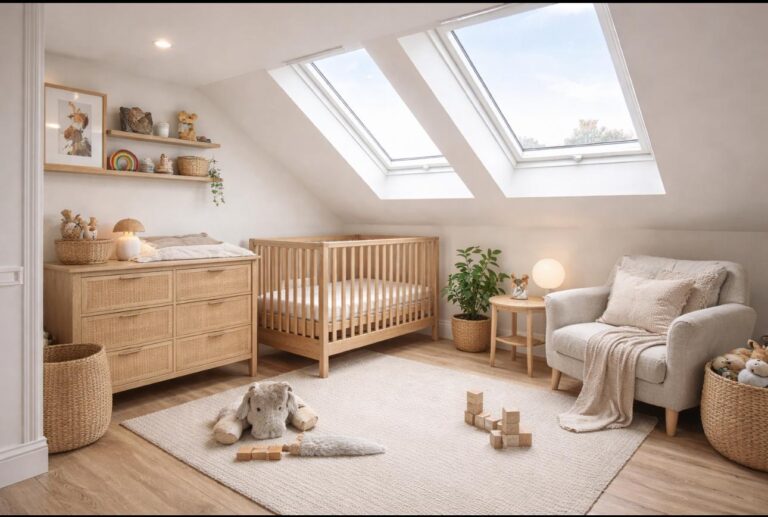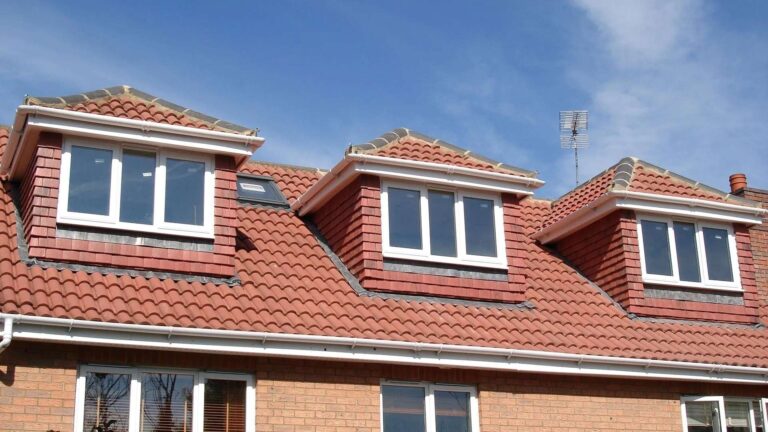

If you’re looking for the most affordable and quickest way to convert your loft in West London, a Velux conversion is probably your answer. Also called a roof light conversion, this type of conversion works within your existing roof structure, adding windows and converting the space without building dormers or extending outward. It’s the simplest type of loft conversion, and for many West London properties, it’s absolutely perfect.
We’ve been doing Velux conversions across Ealing, Hammersmith, Richmond, and Fulham for over 25 years, and they’re ideal for properties that already have decent head height in the loft and don’t need the maximum possible space. You get a beautiful, light filled room for less money and in less time than other conversion types, and because you’re not altering the external appearance of your roof significantly, planning permission is rarely needed.
Let me walk you through everything you need to know about Velux loft conversions what they are, what they cost, whether one would work for your property, and how to get the best results.
What Is a Velux Loft Conversion?
A Velux conversion is the simplest type of loft conversion. Instead of building dormers or extending your roof outward, we work within your existing roof structure. We strengthen the floor, add Velux roof windows to bring in natural light, install a staircase, and convert the existing loft space into a habitable room.
The name comes from Velux, the leading manufacturer of roof windows, though technically you could use other brands. Most people in the trade just call them Velux conversions regardless of the actual window brand used.
The key characteristic is that your roof’s external profile stays the same. From the street, your house looks unchanged the only visible difference is the addition of roof windows. This is a huge advantage for planning permission and for maintaining the character of period properties.
Inside, you get a room with sloping ceilings that follow your existing roof line. The usable floor space is less than you’d get with a dormer conversion because the sloping ceilings reduce headroom at the edges of the room. However, if your roof already has good pitch and height, you can still create a very usable space.
Why Velux Conversions Work Well in West London
West London’s Victorian and Edwardian properties often have generous roof pitches and decent loft heights. Many of these properties have enough existing head height to create a comfortable room without needing to extend the roof outward.
The typical Victorian terraced house in Acton or Shepherd’s Bush has a pitched roof with around 2.2–2.5 metres of head height at the ridge. That’s enough to create a bedroom or home office in the central section of the loft, with the lower eaves areas used for storage.
Planning permission is rarely needed for Velux conversions in West London, even in conservation areas. Because you’re not altering the roof’s external profile significantly, and the windows don’t protrude more than 150mm from the roof slope, most Velux conversions fall comfortably within permitted development rights.
This makes them particularly attractive in areas like Kew, Chiswick, and Richmond where planning controls are strict. You can add valuable living space without the time and cost of a planning application.
The cost effectiveness is another major advantage. Velux conversions typically cost £40,000–50,000 in West London, compared to £45,000–60,000 for dormer conversions. If you’re on a tighter budget but still want to add space, a Velux conversion delivers excellent value.
What You Can Fit in a Velux Conversion
The usable space in a Velux conversion depends on your roof’s pitch and height, but here’s what’s typically achievable in a standard West London terraced or semi-detached house.
Bedroom
The most common use is a bedroom. You’ll have enough space for a double bed in the central area where head height is best, with wardrobes or storage in the lower eaves areas.
A typical Velux conversion in a West London terraced house creates a bedroom of around 15–20 square metres of usable floor space. That’s smaller than you’d get with a dormer, but it’s still a proper double bedroom.
The sloping ceilings actually create quite a cozy, intimate atmosphere that works beautifully for bedrooms. Many clients in Hammersmith and Fulham tell us they prefer sleeping in their Velux loft bedroom to their previous bedroom because it feels like a private retreat.
Home Office
Velux conversions make excellent home offices. You need space for a desk, chair, and some storage all easily achievable in a Velux conversion.
The natural light from multiple roof windows is perfect for working. Position your desk in the central area where you’ve got full head height, and use the eaves spaces for filing cabinets or shelving.
Since the pandemic, we’ve done loads of Velux conversions in Ealing and Acton specifically for home offices. Clients love having a dedicated workspace that’s separate from their living areas but doesn’t require the investment of a full dormer conversion.
Children’s Bedroom or Playroom
Kids love Velux loft rooms. The sloping ceilings and roof windows create a den-like atmosphere, and children are less bothered by reduced head height in the eaves areas.
A Velux conversion works well as a bedroom for one child or a playroom where toys and mess can be contained away from the main living areas.
Guest Bedroom
If you need occasional guest accommodation rather than a full time bedroom, a Velux conversion is perfect. It’s comfortable and private for guests, and the lower cost compared to a dormer conversion makes sense if the room won’t be used daily.
What You Can’t Fit
Velux conversions have limitations. You typically can’t fit an ensuite bathroom because there isn’t enough space once you’ve accommodated a bed and basic furniture. If an ensuite is essential, you’ll need a dormer conversion.
You also can’t create the large, spacious master suites that are possible with dormer or L-shaped conversions. Velux conversions are more compact and cozy rather than grand and spacious.
Planning Permission and Building Regulations
This is where Velux conversions really shine—they’re the easiest type of conversion for planning and regulations.
Planning Permission
Most Velux conversions don’t need planning permission because they fall within permitted development rights. The key criteria are that the windows don’t protrude more than 150mm from the existing roof slope, the volume of space added doesn’t exceed permitted development limits (40 cubic metres for terraced, 50 cubic metres for detached/semi-detached), and you’re not in a conservation area with additional restrictions.
Even in conservation areas, Velux conversions often don’t need permission because the external changes are minimal. However, it’s worth checking with your local planning authority or having us assess your property.
If you’re in a listed building, you’ll need listed building consent even for Velux conversions. But for the vast majority of West London properties, planning permission isn’t required.
Building Regulations
Building regulations approval is mandatory for all loft conversions, including Velux conversions. This covers structural safety, fire safety, insulation, ventilation, and staircase design.
The requirements are the same as for any loft conversion: proper structural calculations, adequate floor joists, fire rated doors and smoke alarms, high performance insulation, and a compliant staircase.
At Loft Conversion West London, we handle all building regulations applications and inspections as part of our service. We ensure everything meets the required standards and you receive your completion certificate.
The Construction Process
Velux conversions are quicker and less disruptive than other conversion types because we’re not altering the roof structure significantly.
Timeline
Construction typically takes 8–12 weeks for a Velux conversion, compared to 10–14 weeks for a dormer. The shorter timeline is because there’s no dormer to build—we’re working within the existing roof structure.
Including design and building regulations approval, the total timeline from initial consultation to completion is typically 4–5 months.
What’s Involved
- We start by erecting scaffolding to provide safe access to the roof. This stays up for the duration of the project.
- Inside, we prepare the loft space by removing existing flooring and insulation. We install or strengthen floor joists to meet building regulations load requirements—the existing loft floor wasn’t designed for habitable rooms.
- Steel beams are installed if needed to support the roof structure and create open space without internal supporting walls. Not all Velux conversions need steel beams, but many do to create adequate usable space.
- We install the Velux roof windows, which involves cutting openings in the roof, fitting the windows, and ensuring everything is properly weatherproofed. Modern Velux windows are designed for easy installation and come with flashing kits that ensure watertight seals.
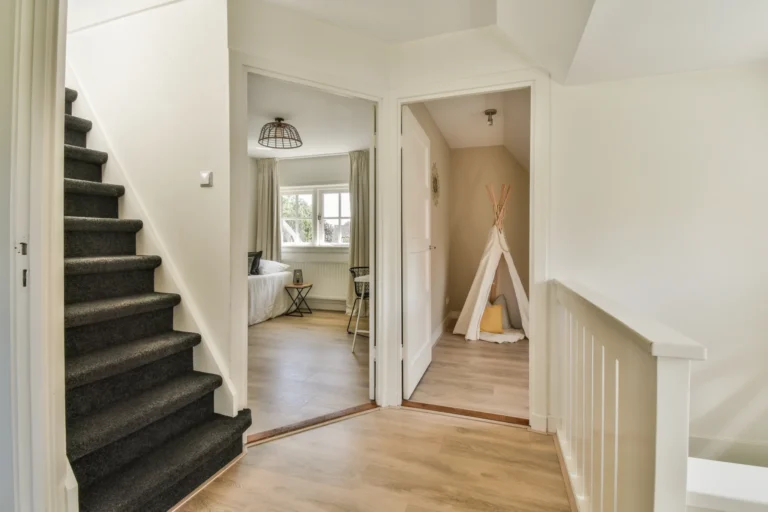
- The staircase is installed, connecting your new loft room to the floor below. This is often the most challenging part because finding space for a building regulations compliant staircase can be tricky.
- Electrical work includes wiring for lights, sockets, and heating. We typically extend your existing central heating system to include radiators in the loft.
- Insulation is installed throughout—in the roof between and over rafters, in the floor, and in any internal walls. Building regulations require high performance insulation, which keeps the space comfortable year round.
- Plasterboarding, plastering, and decoration transform the space into a finished room. We install flooring, skirting boards, doors (including fire rated doors where required), and all final fixtures.
Building control inspects at key stages and issues your completion certificate once everything is complete and compliant.
Cost of Velux Loft Conversions in West London
Velux conversions are the most affordable type of loft conversion, typically costing £40,000–50,000 in West London.
Basic Velux Conversion: £40,000–45,000
This includes structural work and any steel beams needed, new floor joists and flooring, 3–4 Velux roof windows, full insulation to building regulations standards, new staircase, electrical work (lighting, sockets, heating), plastering and decorating, and standard flooring throughout.
This gives you a complete, ready to use loft room that meets all building regulations.
Premium Velux Conversion: £45,000–50,000
If you want higher spec finishes or additional features, costs increase. This might include more or larger Velux windows for extra light, premium window options (electric opening, integrated blinds), underfloor heating instead of radiators, hardwood flooring, custom built in storage in eaves spaces, and designer lighting and electrical fixtures.
What Affects the Cost
- Property size matters: larger properties have bigger loft spaces, which means more floor area to cover and potentially more windows needed.
- The amount of structural work required varies: If your existing roof structure is in good condition and adequately sized, structural costs are lower. If we need extensive strengthening or multiple steel beams, costs increase.
- Staircase location and design affect cost: A straightforward staircase above your existing stairs is most cost effective. If we need to build the staircase in a more complex location, or if space constraints require a space saver or spiral staircase, costs increase.
- Finishes make a significant difference: Basic finishes keep costs down, while premium materials and custom joinery push costs up.
Additional Costs
- Building regulations fees: £800–1,200
- Structural engineer: £1,500–2,500 (usually included in our quotes)
- Party wall agreements (if needed): £700–1,500
At Loft Conversion West London, we provide fixed price quotes that include all these elements, so there are no surprises.
Design Considerations for Velux Conversions
Good design maximizes the usable space in a Velux conversion and creates a comfortable, attractive room despite the sloping ceilings.
Window Placement
The number and position of Velux windows dramatically affects how the space feels. Too few windows and the room feels dark and cave-like. The right number and placement creates a bright, airy space.
We typically recommend 3–4 Velux windows for a standard West London terraced house loft conversion. Position them to provide even light distribution throughout the space, not all clustered in one area.
Consider the views as well as the light. Velux windows positioned to capture views of gardens or trees create a lovely connection to the outdoors.
Window size matters too. Larger windows provide more light but cost more and can make the space feel exposed. We balance light levels with privacy and cost.
Maximizing Usable Space
The key challenge in Velux conversions is dealing with the sloping ceilings. The central area where you have full head height is your main usable space—this is where beds, desks, or seating go.
The eaves areas where the ceiling slopes down aren’t comfortable for standing but are perfect for storage. Built-in wardrobes, drawers, and shelving in these areas maximize storage while keeping the central space clear.
Floor-to-ceiling built-in storage looks elegant and makes far better use of space than freestanding furniture, which leaves awkward gaps and wasted space.
Staircase Solutions
Finding space for the staircase is often the biggest design challenge. The staircase needs to meet building regulations for pitch, headroom, and width, which means it takes up significant space.
The most efficient location is usually directly above your existing staircase. This minimizes the impact on your first floor rooms and creates a logical flow through the house.
If that’s not possible, we might build the staircase in a rear bedroom (sacrificing some bedroom space) or in a landing area if you’ve got a generous landing.
Space saver staircases are an option where space is really tight. These have alternating treads and can be steeper than standard stairs, though they’re less comfortable to use.
Insulation and Ventilation
Velux conversions need excellent insulation because you’re creating a habitable room directly under the roof. Heat loss in winter and overheating in summer are real concerns without proper insulation.
We use high performance insulation between and over the rafters, creating a continuous insulated envelope. This keeps the space comfortable year round and reduces energy bills.
Ventilation is crucial for preventing condensation and maintaining air quality. Velux windows provide excellent ventilation when opened, and we ensure you have adequate background ventilation as well.
Velux vs Dormer: Which Is Right for You?
This is the question everyone asks, and the answer depends on your priorities, budget, and property.
Choose a Velux Conversion If:
- You want the most affordable option: Velux conversions cost £40,000–50,000 vs £45,000–60,000 for dormers.
- You want the quickest conversion: 8–12 weeks construction vs 10–14 weeks for dormers.
- You want to avoid planning permission: Velux conversions rarely need it, even in conservation areas.
- Your existing loft already has good head height: if you’ve got 2.3+ metres at the ridge, a Velux conversion can work well.
- You don’t need an ensuite bathroom: Velux conversions typically don’t have space for ensuites.
- You’re creating a home office or single bedroom: these uses work perfectly in Velux conversions.
Choose a Dormer Conversion If:
- You want maximum usable space: dormers create significantly more floor area with full head height.
- You want an ensuite bathroom: dormers have space for ensuites, Velux conversions typically don’t.
- Your existing loft has limited head height: dormers create headroom, Velux conversions work within existing height.
- You’re creating a master bedroom suite: dormers provide the space for a proper suite with ensuite and storage.
- You want the best return on investment: dormers typically add more value because they create more space.
Living with a Velux Loft Conversion
Light and Atmosphere
Velux conversions are surprisingly bright. Multiple roof windows bring in loads of natural light from above, creating a lovely, airy atmosphere. The light quality is actually better than in many standard rooms because it’s coming from above rather than just from the sides.
The sloping ceilings create a cozy, intimate feel that works beautifully for bedrooms. Many clients tell us their Velux loft bedroom feels like a sanctuary—private, peaceful, and comfortable.
Temperature Control
Properly insulated Velux conversions are comfortable year round. The high performance insulation required by building regulations keeps the space warm in winter and prevents overheating in summer.
Velux windows can be opened for ventilation, which is crucial on hot days. Opening windows at opposite ends of the space creates excellent cross ventilation.
Heating is usually provided by extending your existing central heating system. One or two radiators keep the space comfortable, and good insulation means running costs are reasonable.
Privacy
Roof windows provide excellent natural light while maintaining privacy. Unlike standard windows at eye level, roof windows are angled upward, so neighbors can’t see in.
You can add blinds if you want additional privacy or light control. Velux makes integrated blinds that fit perfectly and are operated by remote control.
Storage
The eaves spaces in Velux conversions are perfect for storage. Built-in wardrobes, drawers, and shelving make use of these low ceiling areas while keeping the main central space clear and uncluttered.
Most clients are surprised by how much storage they can fit in the eaves. A typical Velux conversion can accommodate several meters of hanging wardrobe space, multiple drawer units, and shelving easily enough for a bedroom’s worth of clothes and belongings.
Maintenance
Velux windows are low maintenance and designed to last decades. The glass is easy to clean from inside—most Velux windows pivot 180 degrees, so you can clean the outside from inside your loft.
The roof requires the same maintenance as before the conversion. Modern roofing materials and proper installation mean your roof should remain watertight for many years.
At Loft Conversion West London, we provide a 5 year insurance-backed guarantee through HIG, covering any defects or issues with the construction.
Frequently Asked Questions
How much does a Velux loft conversion cost in West London?
A Velux conversion typically costs £40,000–50,000 in West London, making it the most affordable type of loft conversion. This includes all structural work, 3–4 Velux roof windows, insulation, staircase, electrical work, and decoration. At Loft Conversion West London, we provide fixed price quotes with no hidden costs, so you know exactly what you’re paying from the start.
Do we need planning permission for a Velux conversion?
Usually no. Most Velux conversions fall within permitted development rights because the windows don’t protrude more than 150mm from the roof slope and you’re not altering the roof’s external profile significantly. Even in conservation areas, Velux conversions often don’t need planning permission. However, listed buildings always require consent. We assess your property and advise definitively whether permission is needed.
How long does a Velux loft conversion take?
Construction takes 8–12 weeks for a Velux conversion, which is quicker than dormer conversions (10–14 weeks). Including design and building regulations approval, the total timeline is 4–5 months from initial consultation to completion. Velux conversions are the fastest type of loft conversion because we’re working within your existing roof structure.
Can we fit an ensuite bathroom in a Velux conversion?
It’s difficult and rarely practical. Velux conversions have less usable space than dormer conversions because of the sloping ceilings, and once you’ve accommodated a bed and basic furniture, there typically isn’t enough space for an ensuite. If an ensuite bathroom is essential, a dormer conversion is a better choice. However, you can create a very comfortable bedroom without an ensuite.
Is a Velux conversion better than a dormer?
It depends on your needs and budget. Velux conversions are more affordable (£40,000–50,000 vs £45,000–60,000), quicker to build, and rarely need planning permission. However, dormers provide significantly more usable space and can accommodate ensuites. Choose a Velux if you want an affordable home office or bedroom without an ensuite. Choose a dormer if you want maximum space or need an ensuite.
How many Velux windows do we need?
Typically 3–4 windows for a standard West London terraced house loft conversion. This provides good natural light throughout the space without making it feel too exposed. The exact number depends on your loft size, the orientation of your roof, and how much natural light you want. We design window layouts that balance light, views, privacy, and cost.
Will our loft have enough head height for a Velux conversion?
Most Victorian and Edwardian properties in West London have adequate head height for Velux conversions. You need at least 2.2 metres at the ridge to create a comfortable space. We assess head height during our initial survey and advise whether a Velux conversion will work or whether you’d be better with a dormer that creates additional headroom.
Can we add more Velux windows later if we want more light?
Yes, though it’s more cost effective to install all the windows during the initial conversion. Adding windows later requires scaffolding, roof work, and internal finishing, which costs more per window than installing them all at once. We recommend getting the window layout right from the start, but it is possible to add more later if needed.